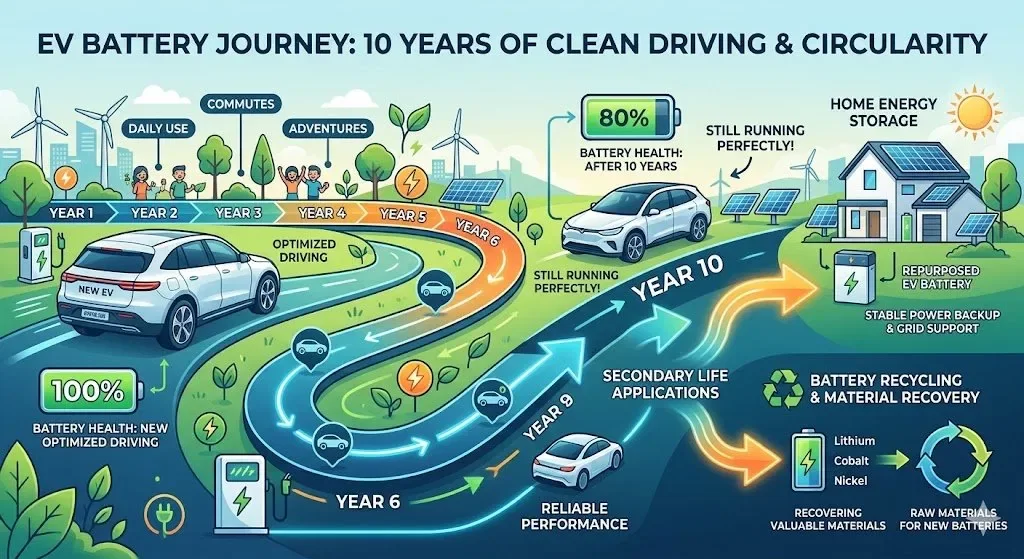
August 18 is an important battery-policy date
European battery regulation is moving from broad sustainability requirements toward more detailed information about the battery itself. According to the Turkish Ministry of Trade’s summary of the EU framework, 18 August 2026 is the date associated with mandatory carbon-footprint performance classification for electric-vehicle batteries.
The same framework also introduces labelling requirements and a later QR-code-based digital battery passport for relevant batteries. The result is a gradual shift from “how many kWh?” toward “how was this battery produced, what is inside it, and what happens at end of life?”
Why a battery passport matters
Today, an EV buyer can usually see battery capacity, charging speed and sometimes chemistry. What is much harder to see is the battery’s upstream footprint, recycled content and other lifecycle information.
A digital battery passport is intended to make this information more accessible. The EU framework includes requirements around carbon footprint, performance and durability, and later requires QR-code access to digital battery information.
The big change: battery specifications are moving from purely performance-based marketing toward a combination of performance, sustainability and traceability information.
Will this make EV comparisons more useful?
Potentially, yes. Imagine comparing two EVs with similar range and charging performance but very different battery-carbon profiles. A future comparison could include not only “77 kWh, 200 kW DC” but also a standardized battery sustainability indicator.
That could eventually influence residual values, fleet procurement and manufacturer competition. It may also make battery recycling and material sourcing part of mainstream vehicle comparisons rather than specialist topics.
The recycled-material timeline is longer
The EU framework does not mean every EV battery suddenly contains a fixed share of recycled lithium or cobalt in 2026. The recycled-content obligations phase in later. The Turkish Ministry of Trade summary lists 2031 and 2036 milestones for minimum recycled content for specified materials.
This is important because it separates transparency today from mandatory recycled content later. Buyers should not assume that a 2026 battery already meets the future recycled-material thresholds.
What should EV buyers look for now?
- Battery chemistry and usable capacity.
- Charging performance rather than only peak DC power.
- Warranty and battery-health coverage.
- Manufacturer information about carbon footprint and recycled content where available.
- How easily the battery can be diagnosed, repaired or recycled at end of life.
The battery passport will not make every EV automatically greener. It should, however, make it easier to distinguish measurable sustainability performance from vague marketing claims.