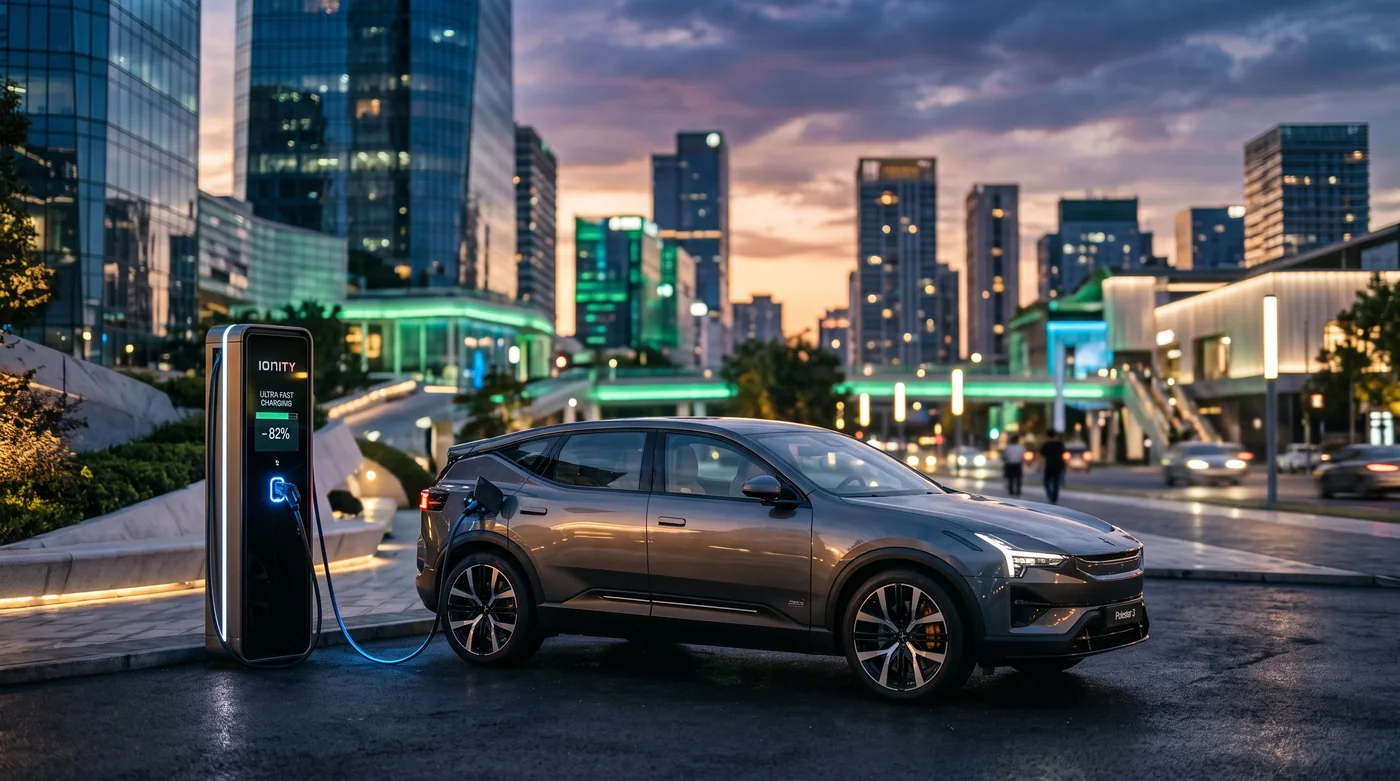
The tariff debate has moved on
Europe’s discussion about Chinese electric vehicles is no longer simply about whether tariffs can stop imports. Chinese brands are already expanding their presence, while European manufacturers face pressure to lower costs and accelerate product development.
Recent European market reporting shows Chinese battery-electric brands continuing to gain share even under the EU’s countervailing-duty regime. The result is a more complicated question: can tariffs slow the competitive pressure without making EVs more expensive for European consumers?
Chinese EVs are not competing on price alone
Price remains important, but the strongest Chinese entrants increasingly compete on battery technology, charging speed, software, equipment and manufacturing efficiency. BYD’s Blade Battery, for example, is marketed around safety and durability while its newer charging systems target very short charging stops.
That means European manufacturers face a technology and cost challenge at the same time. A tariff can alter the landed cost of a vehicle, but it cannot by itself eliminate differences in development speed or manufacturing economics.
The EU has kept countervailing duties in place
The International Energy Agency notes that EU countervailing duties on Chinese battery-electric cars were implemented in 2024 and are officially maintained through the end of 2029. The policy has helped keep the Chinese share of EU electric-car sales below 20% in 2025, according to the IEA.
At the same time, the European Commission has created a framework for Chinese manufacturers to propose price undertakings that could avoid the standard duties under specified conditions. Volkswagen Anhui was the first to file such an undertaking in February 2026.
Could local manufacturing change the equation?
One of the most important developments is that Chinese manufacturers are increasingly considering production outside China. Building vehicles closer to customers can reduce exposure to trade barriers and shorten supply chains.
This creates an interesting future for Europe: the debate may shift from “Chinese cars versus European cars” toward “who controls the technology, battery supply chain and manufacturing platform?” A vehicle assembled in Europe can still rely heavily on Chinese-developed technology.
What does this mean for EV buyers?
More competition can be good for buyers if it leads to lower prices, better equipment and faster charging. But buyers should also consider service networks, parts availability, software support, resale values and battery warranties.
Our take: tariffs may influence prices, but they are unlikely to settle the technology race by themselves. The most important competition will be over cost per vehicle, charging performance, software and manufacturing scale.