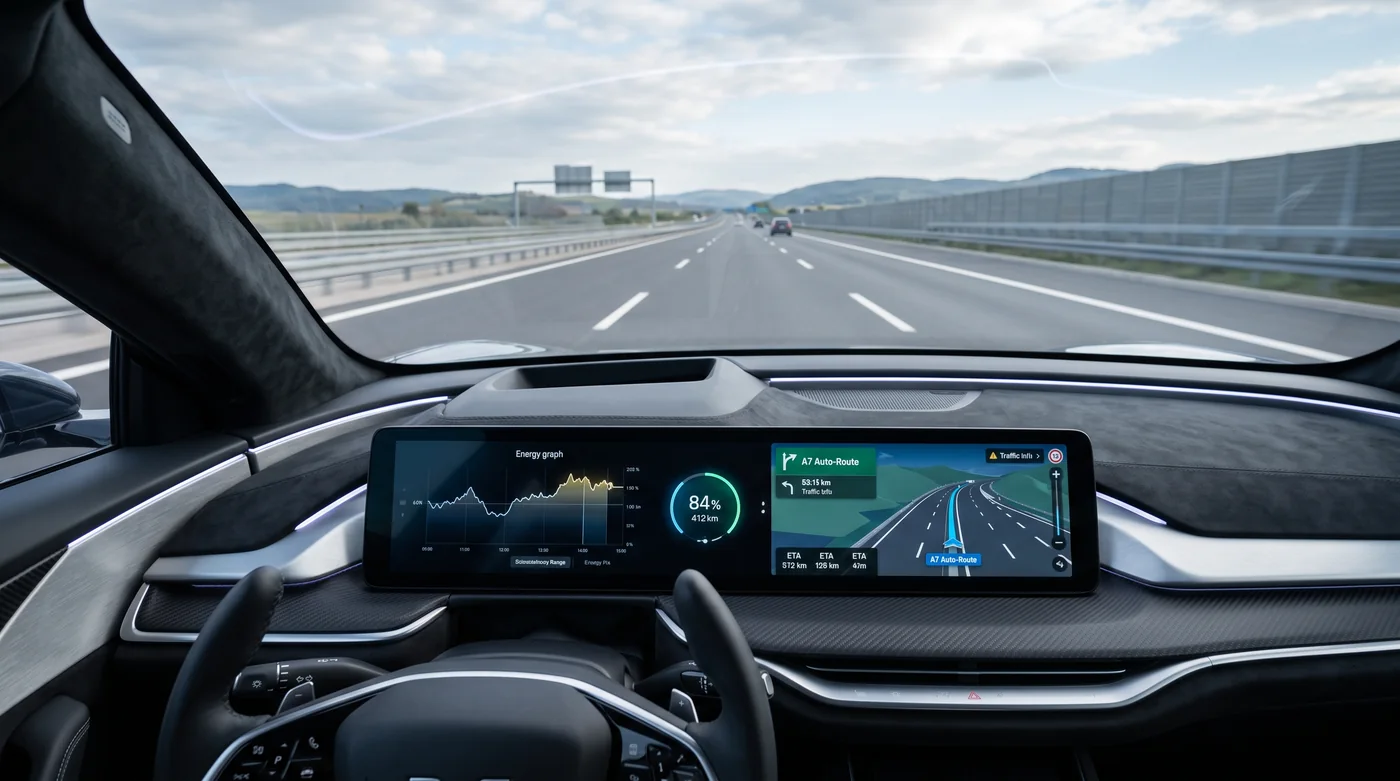
The i3 name is back — but the concept has changed
The original BMW i3 was a radical city-focused EV. The 2026 BMW i3 takes a very different role: it is the second production model based on BMW’s Neue Klasse architecture and the electric counterpart to the 3 Series. BMW says production is scheduled to begin in August 2026 at its Munich plant, with customer deliveries beginning in autumn.
That makes the new i3 important beyond the badge. It is one of the clearest demonstrations of how BMW intends to scale its next-generation electric drivetrain, battery and software technology across the wider range.
900 km of WLTP range — but with an important caveat
BMW quotes up to 900 km of WLTP range for the new i3. The company currently labels the figures as provisional, so the final certified value can change depending on the exact version and test configuration.
What matters: the headline number is not simply about installing a larger battery. BMW is combining a new high-voltage battery concept, improved eDrive technology, aerodynamics and an 800-volt electrical architecture.
For buyers, the more interesting question will be how much of that range survives at motorway speeds and in cold weather. VoltEV’s comparison database can put the eventual production specification beside competing EVs once final market data is available.
800 volts and up to 400 kW charging
The new i3 uses BMW’s sixth-generation eDrive technology and an 800-volt architecture. BMW says the car can accept charging at up to 400 kW and add up to 400 km of WLTP range in ten minutes at a suitable DC charger.
That is the part of the specification that may matter more in everyday long-distance driving than the maximum range number. A high peak charging rate can reduce the time spent at motorway charging stops, provided the charging station can actually deliver the power and the battery is at the right temperature.
Bidirectional charging becomes part of the proposition
BMW also says bidirectional charging will allow the i3 to operate as a mobile energy store or supply power to a home. This moves the EV beyond being only a transport device and toward the wider energy system.
The practical value will depend on market availability, compatible chargers, local grid rules and software support. Nevertheless, it is a significant direction for the Neue Klasse platform because the battery can become useful even when the vehicle is parked.
Why the new i3 matters
The new BMW i3 is not trying to recreate the small, quirky identity of the first-generation i3. Instead, it is positioned as a mainstream premium electric sedan with the technology BMW expects to use across its next generation.
For EV buyers, the key numbers to watch after final certification are real-world range, charging-curve performance, price and how widely bidirectional charging is supported. Those will determine whether the i3 is simply an impressive technology demonstrator or a genuinely compelling long-distance EV.